Chronic Neck & Back Pain Treatment in Victoria, BC
When neck or back pain keeps coming back, the goal isn't simply to chase the next painful spot.
Persistent neck and back pain can affect how you work, sleep, exercise and participate in everyday life.
At Dr. Jerry Lam's practice in Victoria, BC, we take a structured approach to persistent spinal problems. We begin by understanding your history, examining how you move, and identifying the factors that may be contributing to your symptoms.
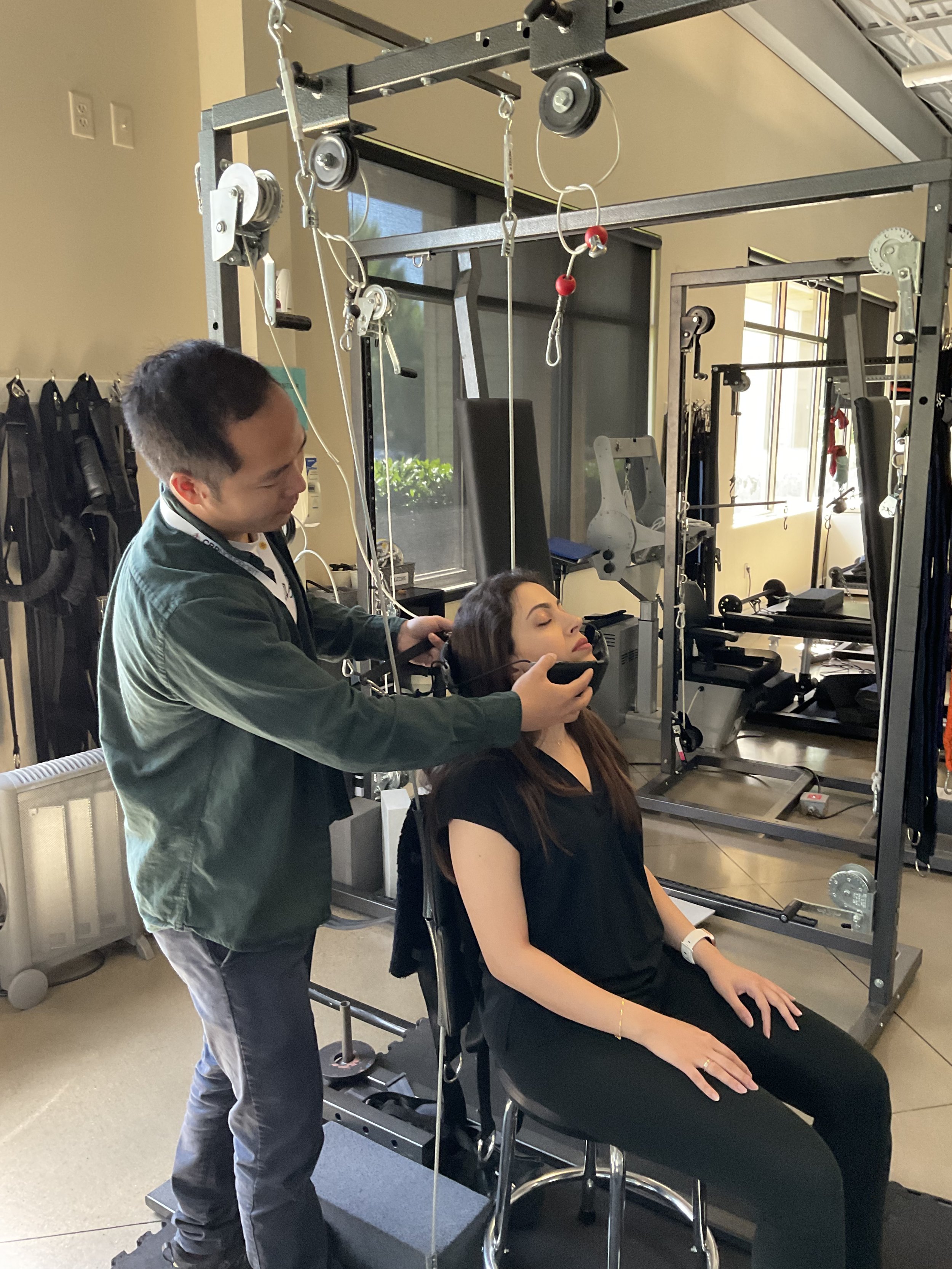
Depending on your presentation, care may include chiropractic treatment, functional rehabilitation, postural correction, spinal traction and other evidence-informed approaches.
For patients with appropriate structural or postural findings, Chiropractic BioPhysics® (CBP) principles may also be incorporated into a more specific corrective rehabilitation plan.
Why does your neck or back pain keep coming back?
Pain is often only one part of the problem.
Persistent spinal symptoms may be influenced by a combination of factors, including:
Previous injuries or whiplash
Repetitive work or physical demands
Reduced spinal or joint mobility
Changes in movement patterns
Muscle weakness or poor movement coordination
Persistent postural or structural changes
Disc or degenerative changes
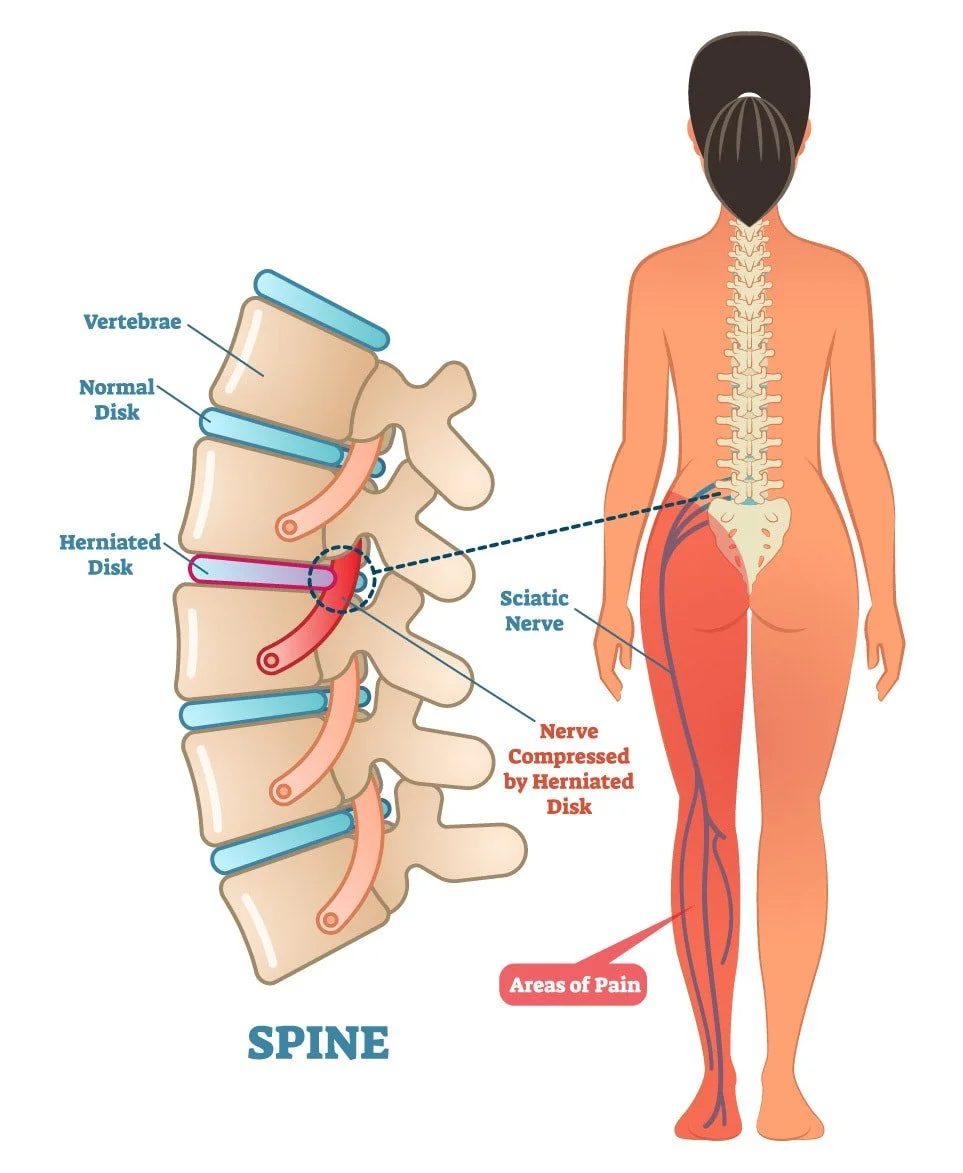
Nerve-related symptoms
Previous episodes of pain that have never fully resolved
This doesn't mean that every chronic pain problem has one single structural cause.
Our first goal is to determine what is most relevant in your individual case.
Our approach to chronic neck and back pain
1. Understand the cause of your symptoms
Your first assessment begins with a detailed history and appropriate clinical examination.
We may evaluate:
Neurological function
Orthopaedic findings
Range of motion
Movement patterns
Posture
Spinal and joint function
Functional limitations
Previous injuries and treatment history
When clinically indicated, diagnostic imaging may also be considered.
2. Objectively measure what we find
Rather than relying only on how you feel on a particular day, we want to establish
useful clinical measures that can help guide your care.
Depending on your presentation, this may include:
Postural assessment
Range-of-motion measurements
Functional testing
Neurological or orthopaedic testing
Spinal imaging when clinically indicated
Objective measurements of spinal alignment when structural correction is being considered
The goal is to establish a clearer baseline and determine whether you are actually progressing.
3. Build the appropriate care strategy
Not every patient needs the same type of treatment.
Depending on your findings and goals, your care may emphasize:
Symptom-focused care
For patients who primarily need pain relief, improved mobility and functional improvement.
Functional rehabilitation
When strength, mobility, movement coordination or physical capacity are important contributors.
Structural/postural rehabilitation
When measurable spinal or postural findings are relevant to the patient's presentation and goals.
A combination of approaches
Many patients benefit from combining symptom management, functional rehabilitation and more specific corrective strategies.
When Chiropractic BioPhysics® may be appropriate
Dr. Jerry Lam is an Advanced Certified Chiropractic BioPhysics® practitioner.
CBP is a specific approach to spinal rehabilitation that uses objective assessment of spinal posture and alignment to develop individualized corrective strategies.
For appropriate patients, a CBP-based plan may incorporate:
Specific Chiropractic Adjustments
Mirror-image® Exercises
Corrective 3D spinal traction
Mirror-image Postural exercises
Orthotic/postural support when appropriate
Home Spinal Hygiene Routine
Periodic reassessment
The goal is not simply to provide repeated symptom relief. When structural correction is appropriate, the goal is to work toward measurable changes in spinal posture and function over time.
CBP is not automatically appropriate for every patient. The assessment helps determine whether a structural corrective approach makes sense for your condition and goals.
What if my pain travels into my arm or leg?
Neck and back problems can sometimes be associated with symptoms extending into an arm or leg.
These may include:
Numbness or tingling
Burning or altered sensation
Radiating pain
Weakness
Changes in reflexes or neurological function
These symptoms require a more careful assessment.
When appropriate, we can assess whether your presentation is consistent with a spinal or nerve-related problem and determine whether conservative care is appropriate or whether additional medical investigation or referral should be considered.
What happens during your care?
Your treatment may progress through different stages depending on your condition.
Phase 1 — Relief & Stabilization
The initial priority is to reduce symptoms, improve tolerance to movement and establish a foundation for rehabilitation.
Phase 2 — Rehabilitation & Correction
Once appropriate, treatment can progress toward improving function and addressing contributing movement, postural or structural findings.
For patients undergoing CBP-based corrective care, this phase may involve a more structured combination of chiropractic adjustments, traction, exercises and home care.
Phase 3 — Stability
As meaningful improvement is achieved, the focus shifts toward maintaining function and helping you return to the activities that matter to you.
Phase 4 — Long-Term Health
Some patients choose ongoing care based on their individual goals, history, lifestyle and clinical needs.
The appropriate endpoint is different for every patient.
How do we know whether you're actually improving?
We don't want your progress to depend only on:
"It feels a little better today."
Depending on your condition, progress may be assessed through:
Pain and symptom changes
Functional ability
Range of motion
Neurological findings
Posture and movement
Objective spinal measurements when appropriate
Patient-reported outcome measures
Reassessment and imaging when clinically indicated
The goal is to periodically ask:
Are we making meaningful progress?
If not, your care strategy should be reconsidered.
Who may benefit from this type of assessment?
This approach may be appropriate if you are experiencing:
Persistent neck pain
Chronic low back pain
Recurring back pain
Neck pain associated with headaches
Back or neck pain following an injury
Whiplash-related symptoms
Postural or movement-related spinal problems
Disc-related or nerve-related symptoms
Persistent symptoms despite previous treatment
Structural spinal conditions such as scoliosis or abnormal spinal curvature
A comprehensive assessment is the best way to determine what type of care is appropriate.
You don't have to figure out the cause by yourself.
If your neck or back pain has been persistent, recurring or difficult to understand, the first step is not necessarily another treatment.
It is a better assessment.
We can help determine:
What is contributing to your symptoms?
What can be addressed conservatively?
Does your condition require symptom-focused care, rehabilitation, structural correction—or a combination?
How will we measure your progress?
Victoria, BC
Dr. Jerry Lam, DC
Advanced Certified Chiropractic BioPhysics® Practitioner